
Sprache:


Hunting Elephants
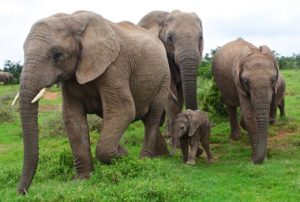 Hunting an elephant is every hunter’s dream. Stalking those giant animals through the african steppe and desserts is a once in a life time experience. Take your shot under the red african sun and remember those moments forever. Find further information about hunting big game in Africa.
Be aware that hunting elephants isn’t something for beginners. The high technical requirements and the danger of this type of hunting requires a lot of experience, skills and courage. There is plenty to consider when hunting elephants. Next to the perfect equipment there are some basic rules to ensure a succesful hunting trip.
The elephant itself is one of the biggest threats for the african people. Every year hundreds of people are harmed or killed by elephants. The giant animal also destroys the farmers’ fields and crops. That’s the reason why many people take actions into their own hands and start poaching. They only want to protect their family and fields.
There is no question that this kind of hunting isn’t sustainable at all. That’s why many countries, provincies and outfitters sell hunting licenses to european hunters. With those licenses the hunters kill problemetic elephants and give money to the protection of the animals and people. Find out how big game hunting in Africa protects both humans and animals.
The perfect projectile for hunting elephants
The perfect projectile for hunting elephants has a high penetration. Every shot to the head of the elephant has to ensure a quick kill in order to be sustainable. If the first shot isn’t effective, the second one has to have a high penetration to kill a fleeing elephant.
To be successful grosswildjagd.de recommends a full-metal jacket with high penetration. The muzzle velocity has to be at least 2.400 f/s to ensure an effective shot to he head within 20m.
Tips and tricks for hunting elephants
- We recommend hunting a single elephant. If you hunt an elephant within a herd shoot the bull. Those two hunts are less dangerous because of the fleeing other animals. If you shoot an elephant cow within a herd, the other members will charge at the hunters.
- Always aim at the brain of the elephant. A shot to the head within 20m is less difficult than one to the heart out of 60m.
- As listed above the most important consideration should be the penetration of the projectile.
- When knocking an elephant down a hunter has to react quickly. If the animal is still alive a second shot to the heart has to be taken within a short period of time.
Find further tips and tricks for hunting big game in Africa.
To stay calm is the top priority when an elephant charges at you. Of course it’s easier said than done. When a almost 4m tall, several ton weighing, angry elephant charges at you, everyone gets nervous. If you step some steps aside the approaching elephant cant’t sense you as long as he runs. Furthermore his sight is very limited.
While beeing in this particular situation make as many noise as possible. It’s recommended to hit the barrel of your rifle with the blade of a knife to make a loud metallic sound and scream as loud as possible. In most cases the elephant gets scared and turns off or even stops. Another effective method to stop the charging elephant is to fire a shot right over his head.
When all of your measures are ineffective you have to knock down the elephant with a straight shot to the head. In the given situation it’s quite hard to take a precise shot straight in the brain. Idealy the shot knocks the elephant down and the hunter is able to take a quick second, fatal shot to the elephant’s heart.
Hunting an elecow
Due to the legal prohibition of trading ebony the hunt of elecows becomes more popular. Anyone who thinks that the hunt on elecows is less dangerous than the ones on bulls are wrong.
Elecows are gregarious animals. When shooting an elecow within a herd caution has to be the top priority. After knocking down an elecow, hunters should step back into a safe distance as quick as possible. The other elephants of the herd will try to attack the hunters and will start charging. The hunters should observe the elephant herd from a safe distance and wait until they move on. After some minutes the hunters can come closer to the knocked down elephant and take the killing shot.
Find your perfect type of hunting elephants and many furhter information about big game hunting in Africa.
The perfect shot
It takes one perfect shot to kill an elephant. Always aim directly to the brain of the animal do get your exclusive trophy.